Creating Play Experiences and Environments that Support the Development of Social Skills

“Inclusion entails recognition of our universal oneness and interdependence. Inclusion is recognizing that we are one even though we are not the same” (Shafik Asante)
Goal 1 ~ Artifact 1A
ECED 531B 97A: Supporting Young Children’s Social Emotional Learning in Early Childhood Programs (Instructor: Dr. Molly Lawlor)
Assignment 5: Connect – Extend – Challenge
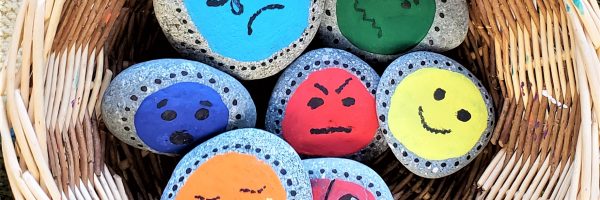
While learning about typical and atypical social development, intervention, and inclusion; I realized that I would like to know more about how I can facilitate play experiences and environments that support social skill development in all children, and particularly in children with special needs or disabilities. An ecological approach focuses on building a nurturing, responsive, and inclusive environment and climate that promotes healthy development for all children. “The development of positive social skills is critical to the successful inclusion of children with disabilities in community-based settings” (Cook, Klein & Chen, 2020, p. 210). A strength-based approach recognizes that each child brings gifts. “Each child has histories, contexts, gifts, capabilities, and potential that can be honoured and nurtured with responsive and productive practices and environments” (British Columbia Early Learning Framework, 2019, p. 25). Early childhood educators have an important role to support children with specials needs or disabilities so they can play, interact socially, establish relationships with their peers, and feel a sense of belonging within the class community. Play can be a powerful, motivating, and meaningful way for children to develop positive and productive social skills.
Writing this paper, enhanced my understanding of how to provide all of my students with equal access to meaningful powerful play, positive social interactions, and effective social skill development. “Regardless of socio-economic status, geographic isolation, gender, sexuality, ethnicity, abilities and learning needs, and family structure and values, every child should be welcomed and empowered to pursue their gifts” (British Columbia Early Learning Framework, 2019, p. 25). Reflecting on this topic, allowed me to continue to work towards incorporating approaches that are equitable, inclusive, and child-centered by focusing on the unique context of each child. As “[t]he goal of inclusion requires educators to consider creating physical spaces, routines, or approaches that will allow each child to participate, to think, and to discover in his or her unique ways” (British Columbia Early Learning Framework, 2019, p. 25). This paper illustrates how play can be used to support children’s learning and growth in the area of social skill development to encourage overall success, health, happiness, and well-being.
Read Online: Creating Play Experiences and Environments that Support the Development of Social Skills
Download PDF: Creating Play Experiences and Environments that Support the Development of Social Skills
References
Asante, S. (2002). What is inclusion? Toronto: Inclusion Press.
Cook, R. E., Klein, M. D., & Chen, D. (2020). Adapting early childhood curricula for children with
special needs (Tenth ed.). Pearson.
Government of British Columbia. (2019). British Columbia Early Learning Framework. Retrieved
from: https://www2.gov.bc.ca/assets/gov/education/early-learning/teach/earlylearning/early_
learningframework.pdf
Growth Mindset: Process-focused Pedagogy A Workshop for Kindergarten Teachers

“…Love challenges, be intrigued by mistakes, enjoy effort and keep on learning” (Carol Dweck)
Goal 1 ~ Artifact 1C
ECED 531B 97A: Supporting Young Children’s Social Emotional Learning in Early Childhood Programs (Instructor: Dr. Molly Lawlor)
Final Assignment – Workshop for teachers: Presentation
This is a workshop about Growth Mindset: process-focused pedagogical thinking. It was created to provide Kindergarten teachers with some ideas and inspiration. The overall goals of this workshop are:
1.To learn how we can develop Growth Mindset to enhance both our personal and our professional lives.
2.To learn how to help our students develop Growth Mindset to support them in at school, at home, and in life.
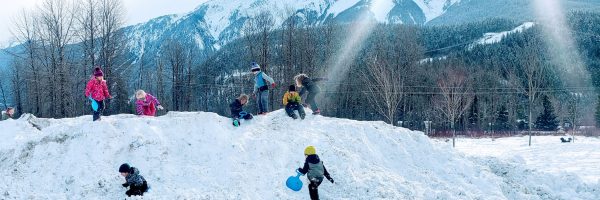
Developing a Growth Mindset can help us acquire skills, including resilience, optimism, and gratitude; skills needed to navigate an increasingly complex world and live the best life we can live. Once we stop focusing on the outcome, and start focusing on the process, we start seeing life differently. We start seeing success, health, and happiness differently. This shift in thinking allows us to make mistakes, take risks, learn, and grow by fully utilizing potentials and possibilities. When we experience the rewards of growth mindset: effort and perseverance first hand, we are more likely to take risks, learn from mistakes, focus on the process, and work through challenges. This presentation describes several strategies that can be used to support our own and our students’ development of growth mindset. Process-focused experiences, including play, encourage students to develop positive mindsets that allow them to acquire skills and traits that lead to personal and academic success, happiness, and well-being.
Link to Presentation: Google Slides
Download PDF: Growth Mindset Workshop
References
Dweck, C, S. (n.d). Retrieved March 1, 2021 from https://www.goodreads.com/quotes/849006-if-
parents-want-to-give-their-children-a-gift-the#:~:text=%E2%80%9CIf%20parents%20
want%20to%20give%20their%20children%20a%20gift%2C%20the,and%20repair%20their%20o
wn%20confidence.%E2%80%9D
Playing the Way to a Growth Mindset in Kindergarten

“Nothing is Impossible. The word itself says I’m possible!” (Audrey Hepburn)

Goal 1 ~ Artifact 1B
EDUC 500 61B: Research Methodology in Early Childhood Education (Instructor: Dr. Mari Pighini)
Assignment 3 – Instalment 3 (Outlining and Completing a Research Proposal)
Over 30 years ago, Carol Dweck coined the terms ‘fixed mindset’ and ‘growth mindset’ to describe the underlying beliefs people have about learning and ability. Growth mindset refers to the perspective that ability can be developed through effort (Dweck, 2006). Research indicates that mindset is malleable and that adopting a growth mindset influences learning behaviours in positive ways (Dweck, 2006). Looking into the topic of growth mindset, this paper proposes a quantitative study to examine the question: Can collaborative play-based learning support the development of student growth mindset in the Kindergarten classroom?
Kindergarten has undergone significant curricular changes including increasing academic standards for young learners, in addition to mandating play-based approaches. As a result, several tensions currently exist in Kindergarten education – tensions between academic learning and play-based learning; and also between teacher-directed instruction and child-directed learning. However, what if collaborative (guided) play could be a compromise, where the locus of control is shared to balance the extrinsic learning goal of the teacher and intrinsic motivation of the child? Collaborative play could then be used as a way to support student acquisition of both academic and developmental skills by providing students with opportunities to learn in a fun, motivating and meaningful context. “The experiences of children’s play have a profound impact on all areas of their growth and development” (Play Today B.C. Handbook: 2019, p.1); in areas of cognition, social and emotional and self-regulation (Lester & Russell, 2008; Pyle, DeLuca, & Danniels, 2017). This research proposal explores how collaborative play could be used to support children’s development of growth mindset to encourage personal and academic success, happiness, and well-being.
Read Online: Playing the Way to a Growth Mindset in Kindergarten
Download PDF: Playing the Way to a Growth Mindset in Kindergarten
References
Dweck, C., S. (2006). Mindset: The New Psychology of Success. New York: Ballantine Books.
Government of British Columbia. (2019). The Play Today B.C. Handbook. Retrieved from:
https://www2.gov.bc.ca/assets/gov/education/early-learning/teach/earlylearning/play-today-
handbook.pdf
Hepburn, A. (n.d). Retrieved March 1, 2021, from https://www.goodreads.com/quotes/12732-nothing-is-
impossible-the-word-itself-says-i-m-possible
Lester, S., & Russell, W. (2008). Play for a change: Play, policy, and practice: A review of
contemporary perspectives. London: Play England.
Pyle, A., DeLuca, C., & Danniels, E. (2017). A scoping review of research on play‐based
pedagogies in education. Review of Education, 5(3), 311-351.